Current Exhibitions

Route 66 is Indian Country
May 17, 2026 — Mar 7, 2027Stretching almost 2500 miles from Chicago, Illinois to Santa Monica, California, over half of Route 66 passes through Indian Country. Officially designated in 1926, the historic “Mother Road” ran through the tribal lands of more than twenty-five Native nations. In New Mexico, Route 66 went through or near the Pueblos of Cochiti, Santo Domingo, San Felipe, Santa Ana, Sandia, Isleta, Laguna, Acoma, and parts of the Navajo Nation.
Gas stations, curio shops, motels, and campgrounds sprang up along the road to serve travelers. Advertising for these businesses promoted romanticized images of New Mexico as an exotic destination characterized by desert landscapes, adobe architecture, and (mis)representations of Native cultures reinforcing the stereotype of a vanishing people frozen in time.
While non-Native businesses built their profits from the commercialization of the Southwest’s Indigenous cultures, tourism opened new economic opportunities for Pueblo and Diné peoples. Artists sold their pottery and jewelry from roadside stands positioned to catch the interest of highway travelers. Trading posts and other businesses purchased work directly from Native artists to sell to tourists seeking an authentic souvenir of their travels.
Construction of the Interstate Highway System introduced higher-capacity roads, faster travel speeds, and more direct routes. As a result, Route 66 was officially decommissioned in 1985. Today, tribally owned enterprises—such as casino resorts and multi-plaza gas stations—have replaced many of the curio shops and roadside attractions that once lined the route. Pueblo communities along this historic corridor are now leading cultural tourism initiatives that support economic development and tribal autonomy while honoring their heritage and reclaiming cultural narratives.
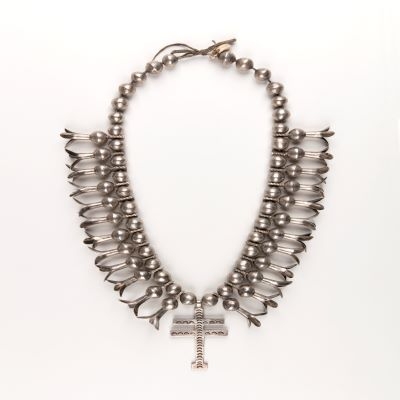
Image: Artist Once Known (Diné), ca. 1925, Cotton, wool, velvet, tin, seed beads, ink, Gift of Don Fulkerson.